AI Series
AI-series payloads add onboard recognition to a gimbal camera: instead of only sending video to the ground, the camera identifies and tracks objects in the frame itself. For inspection, search and security teams this changes the operator's job from "watch the screen" to "confirm what the system found".
What onboard AI actually does
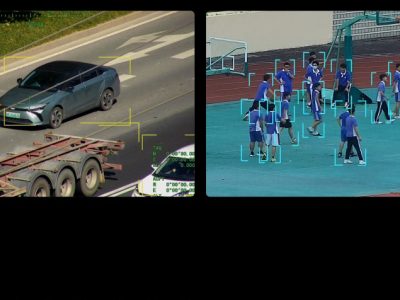
The payload runs a detection model on its own processor and overlays bounding boxes on targets such as people, vehicles, vessels or aircraft. Because detection happens in the air, the system keeps tracking even when the video downlink is momentarily degraded, and it can hand over a target to the gimbal so the camera keeps the object centred without constant manual input.
Practical uses
- Search and rescue: scanning large areas and flagging possible targets for a second look.
- Patrol and security: automatic tracking of a vehicle or person while the operator handles radio and flight decisions.
- Infrastructure inspection: keeping a consistent stand-off distance while the camera holds a component in frame.
- Wildlife and survey work: following moving subjects with less stick input and therefore smoother footage.
Choosing an AI payload
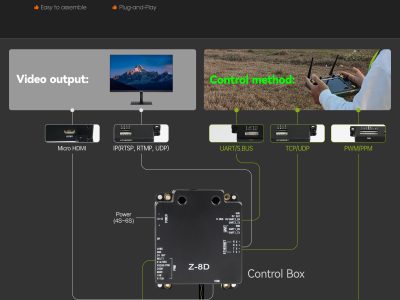
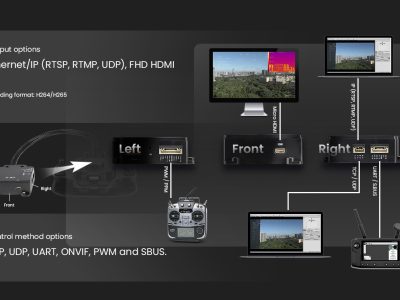
Start with the recognition task, not the specification sheet. Ask which target classes the model is trained for, whether new classes can be added, and how the payload behaves when the target is briefly occluded. Then check integration: video output and control interface (HDMI, RTSP, PWM, S.BUS or serial), gimbal stabilisation quality, weight against your aircraft's payload budget, and whether the camera can compute target coordinates for your ground station.
CSKYUAV supplies AI-series gimbal payloads with OEM/ODM options. Match the payload to your airframe from our drone range, and pair it with GPS and video link hardware for a complete system.
Frequently Asked Questions
Does AI tracking work without a data connection?
Yes. Detection runs on the payload's own processor, so tracking continues even if the downlink drops. The operator simply sees the result when video returns.
Can the system recognise custom objects?
Depends on the model and firmware. Many payloads ship with general classes such as people and vehicles; custom classes usually require a model trained for your use case — ask us what your specific payload supports.
How much does the payload weigh?
AI processing adds mass compared with a plain camera. Always check the payload weight against your aircraft's rated payload and the effect on flight time before ordering.
Does AI tracking replace the operator?
No. It reduces workload by holding a target in frame; the pilot still flies the aircraft and makes every decision about what to record or report.
What should I check for night work?
Recognition quality depends on the image. For night missions pair the payload with suitable lighting or a thermal sensor, and verify detection performance in your own conditions.
Can I get target coordinates?
Many payloads can estimate the position of a tracked object using the aircraft's position, altitude, gimbal angles and ranging data. See our guide on gimbal target location for how the calculation works.