FPV Charger
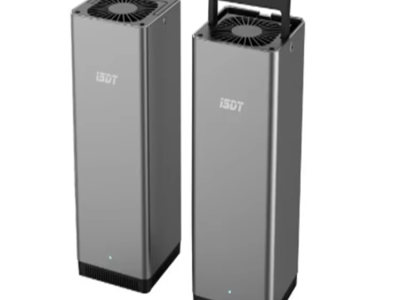
FPV pilots live and die by their chargers. CSKYUAV stocks balance chargers and field units — ISDT and similar — that safely charge, store and discharge LiPo, Li-Ion and LiHV packs. A proper balance charger protects each cell individually, which is what keeps packs healthy and avoids the dreaded puffed cell after a bad cycle.
Choosing a charger
| Need | Look for |
|---|---|
| Bench charging | AC/DC, 1–4 channels, 150–500 W |
| Field / travel | DC input, USB-C PD, compact |
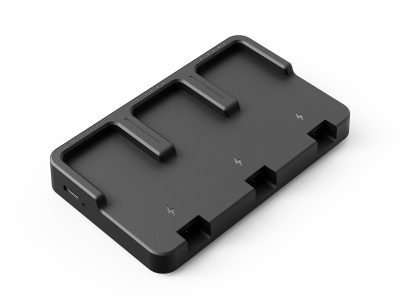
| Parallel packs | High wattage + parallel board |
Match the charger's max wattage and charge current to your largest pack; a 6S 1500 mAh at 2C pulls well under 100 W, but parallel-charging a rack of whoop packs needs headroom. Always set storage mode between sessions. Charge on a non-flammable surface with a fire-safe bag, and fit a smoke alarm above the bench — LiPo energy is dense and unforgiving if a cell is punctured. Label packs by cycle count so you retire tired cells before they swell, and never charge unattended overnight. A balanced routine — slow charge, verify the cell-voltage delta, then store — is the habit that keeps a pack fleet flying safely for a full season.
Frequently Asked Questions
How many watts do I need in a charger?
Roughly watts = cells × capacity(Ah) × charge_rate(C) × 4.2 V. A single 6S 1500 mAh at 1C needs ~38 W; parallel-charging many packs or fast 4C rates pushes you toward 200–500 W units.
Can one charger do LiPo and Li-Ion?
Yes — modern balance chargers support LiPo, Li-Ion, LiHV and NiMH with per-chemistry presets. Just select the chemistry and cell count; the charger handles balance and cutoff.
What is storage mode?
Storage mode brings every cell to ~3.8 V, the safe long-term resting voltage. Use it whenever a pack won't fly within a few days to maximize cycle life.
Is a parallel charging board safe?
Only with same-cell-count, similar-voltage packs and a fused board. Never parallel packs of different cell counts or wildly different states of charge — that forces current imbalance and heat.
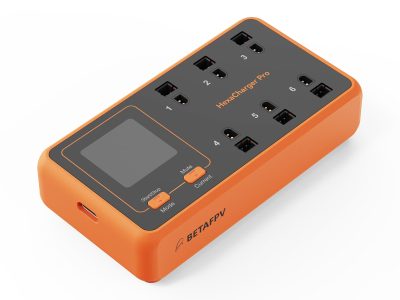
HexaCharger 1S Charger
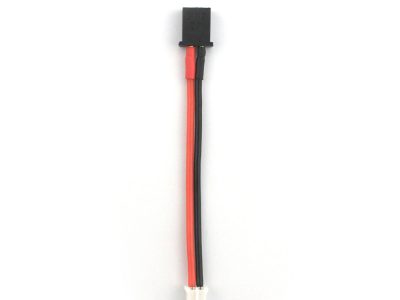
Nanohawk Spare Parts – PH2.0 to GNB27 Charger Adapter
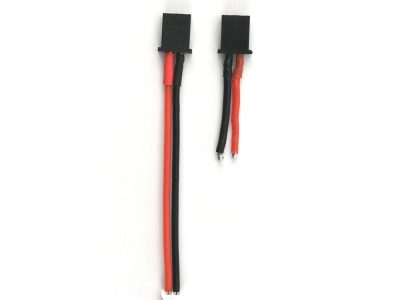
Nanohawk Spare Parts – PH2.0 to GNB27 Charger Adapter & PH2.0 to GNB27 Charging Adapter
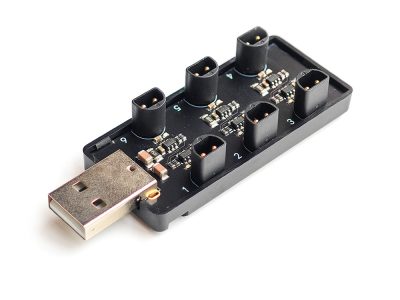
EMAX Tinyhawk Nanoscout Spare Parts Pack F – USB to 3.8V 1S Charger (EM2.0 HV Version)
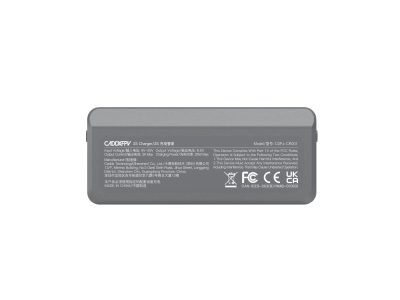
CaddxFPV Protos 2S Charger
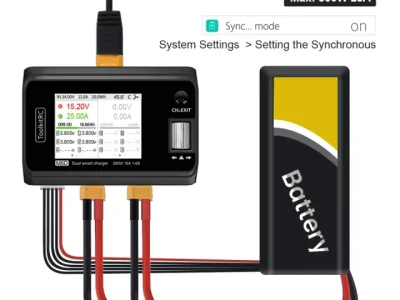
PFLY ToolkitRC M6D 500W 15A DC Dual Channel MINI Smart Charger Discharger Power Supply 1-6S FPV Drone Accessories
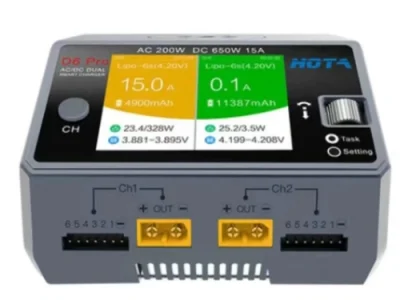
D6PRO charger ADAPTS to XT60 6S battery(fast charge)
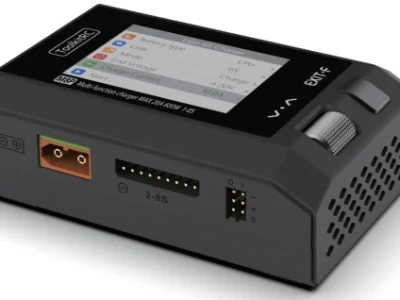
Charger M8P/ External charger power supply ADAPTS to XT90 8S battery
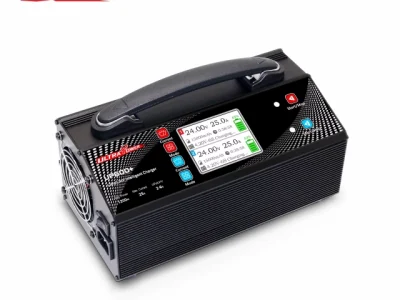
Drone Charger UP600+ 1200W Dual Channels 25A Balance Smart 2-6S LiPo LiHV Charger