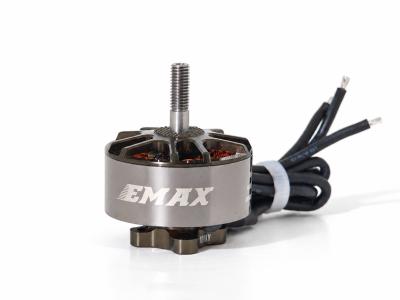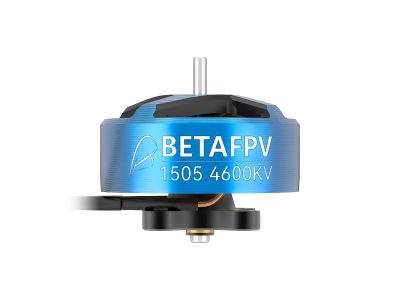
FPV Motors
An FPV motor is a brushless outrunner whose stator size and KV rating decide how much thrust it makes, how hot it runs and what propeller and battery it wants. Reading the four-digit code on the motor tells you most of what you need: 2207 means a stator 22 mm in diameter and 7 mm tall, while the KV figure (for example 1750 KV) is the unloaded rpm per volt.
Reading motor size and KV
The first two digits of the stator code are the diameter and the last two are the height. A taller stator generally gives more torque and a broader efficient band; a wider stator gives more leverage. KV is inversely related to torque: high KV spins fast on small props, low KV turns larger props with more authority and cooler running.
- 1103–1105: tiny whoop and 1–2 inch indoor builds on 1S–2S.
- 1404–1507: 2–3 inch toothpick and lightweight builds.
- 2004–2306: the mainstream 5 inch class on 4S–6S.
- 2506–2808: 7 inch, cinelifter and heavy-lift builds.
- 3110 and above: X-class and heavy payload multirotors.
Matching KV to battery voltage and propeller
Pick KV from the cell count you plan to fly, not the other way round. On 6S, a 5 inch freestyle quad typically lands around 1500–1750 KV; the same airframe on 4S wants roughly 2300–2750 KV to reach similar prop speed. Over-revving a motor by combining high KV with high voltage and a large prop is the fastest way to burn windings or desync the ESC.
Build quality factors that affect longevity
Beyond size and KV, look at bearing size, magnet grade, wire insulation temperature rating and the shaft. A one-piece bell, quality N52H magnets and high-temperature windings survive crashes and sustained full-throttle climbs better. Check that the mounting pattern (typically 16×16 mm or 19×19 mm) and shaft diameter match your frame and prop.
CSKYUAV stocks brushless motors from EMAX, HGLRC, GEPRC, SpeedyBee and iFlight, and supports OEM/ODM motor programmes including custom KV, winding, lead length and branding. Match your motor choice with suitable propellers, an ESC rated above your peak current, and a frame with the correct motor mount pattern.
Frequently Asked Questions
What does 2207 mean on an FPV motor?
It is the stator size: 22 mm diameter and 7 mm height. The stator is the fixed inner part with the windings; the bell (outer can with magnets) rotates around it.
What KV should I choose for a 5 inch quad?
For 6S packs, roughly 1500–1750 KV is common for freestyle. For 4S, look around 2300–2750 KV. Always confirm with the motor manufacturer's thrust table for your specific propeller.
Does higher KV mean more speed?
Not by itself. Higher KV means more rpm per volt, which suits smaller propellers. Top speed depends on prop pitch, airframe drag, battery sag and how well the motor stays in its efficient band.
Can I run 6S on a motor sold as 4S?
Only if the manufacturer's data sheet lists that voltage for your propeller. Running higher voltage increases current and heat dramatically; check thrust-table data and ESC rating before testing.
Why do motors get hot?
Excessively aggressive propellers, over-propping, high KV on high voltage, insufficient ESC timing headroom, or a bent shaft after a crash are the usual causes. Sustained temperatures above the winding rating will demagnetise the bell.
Do I need to match motor KV to ESC amperage?
Yes. Choose an ESC whose continuous rating exceeds the motor's peak current draw with margin, and make sure the ESC firmware (BLHeli_S, BLHeli_32 or AM32) supports your protocol and voltage.
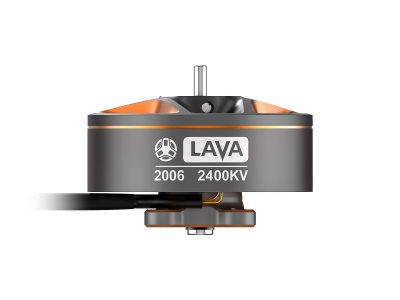
LAVA Series 2006 Brushless Motors
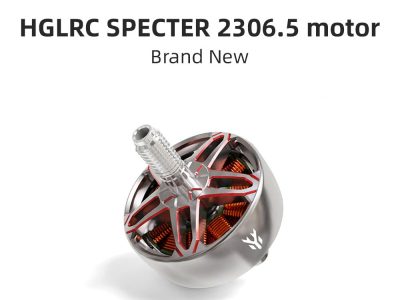
HGLRC SPECTER 2306.5-1900KV
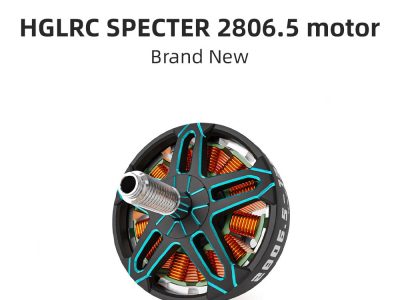
HGLRC SPECTER 2806.5 1350KV brushless motor
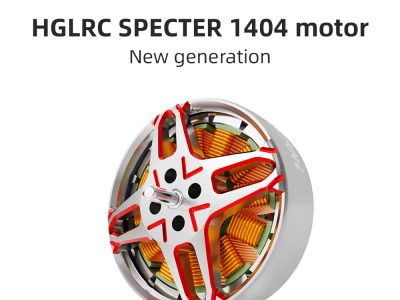
HGLRC SPECTER 1404 2750KV/4800KV/5500KV 4-6S Brushless Motor for FPV Freestyle 2inch Cinewhoop 4inch Toothpick Drones
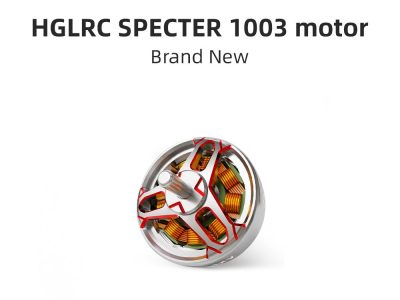
HGLRC SPECTER 1003 10000KV brushless motor
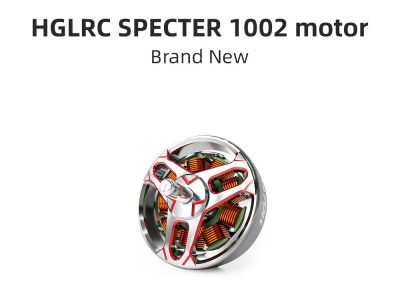
HGLRC SPECTER 1002 21000KV brushless motor
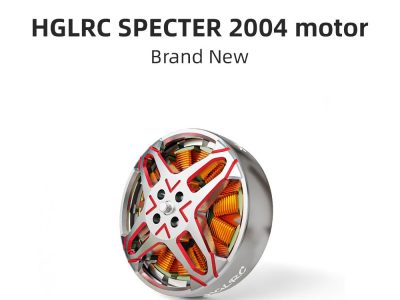
HGLRC SPECTER 2004 1800KV brushless motor
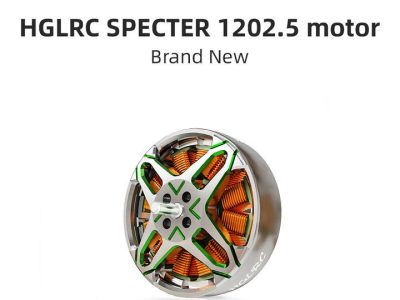
SPECTER 1202.5 11000KV brushless motor
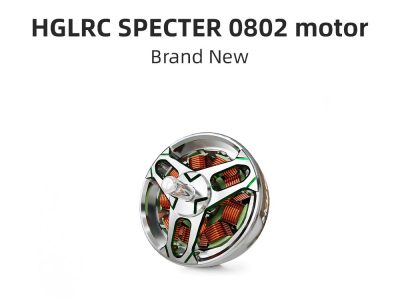
HGLRC SPECTER 0802 21000KV brushless motor
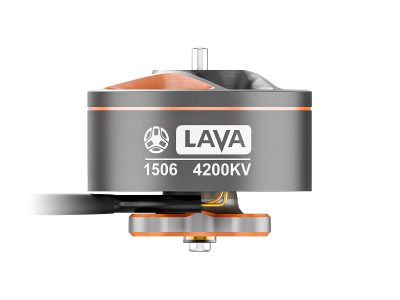
LAVA Series 1506 4200KV Brushless Motors