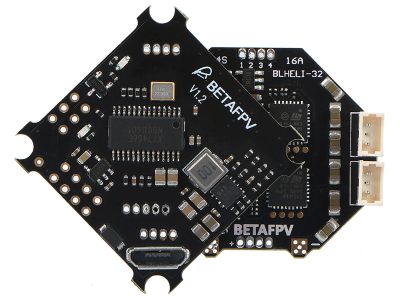
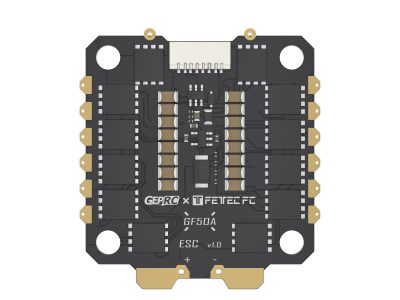
FPV ESC
An ESC (electronic speed controller) converts DC battery power into the three-phase AC a brushless motor needs, and it controls motor speed thousands of times per second based on commands from the flight controller. Its current rating and firmware decide how much abuse your power system survives.
Current rating: continuous versus burst
Manufacturers quote a continuous rating and a burst rating. Match the continuous rating to the peak current your motor and propeller combination actually draws — check thrust-table data rather than guessing — and leave margin, because sustained full-throttle climbs are what overheat ESCs. A 45 A or 55 A 4-in-1 is typical for 5 inch builds; whoops use small single or AIO units, and X-class aircraft use large individual ESCs.
Firmware: BLHeli_S, BLHeli_32 and AM32
BLHeli_S is the long-standing 8-bit firmware found on many all-in-one boards and budget 4-in-1 units. BLHeli_32 runs on 32-bit hardware and adds features such as better current limiting and richer telemetry. AM32 is an open 32-bit alternative that continues to be developed for hardware no longer supported by BLHeli_32. Your firmware determines which ESC protocol and configuration tooling you can use.
Protocols and features
DShot (150/300/600) is the standard digital protocol, replacing older PWM and Oneshot/ Multishot analogue schemes. Bidirectional DShot lets the ESC report motor rpm back to the flight controller, which enables RPM-based filtering and dramatically reduces motor noise in the gyro signal. If your hardware supports it, enabling bidirectional DShot is one of the biggest tuning improvements available.
4-in-1 or individual ESCs
A 4-in-1 board mounts in the stack and keeps wiring tidy — the default for 5 inch builds. Individual ESCs mounted on the arms are used on large aircraft and X-class builds where leads must be longer and serviceability matters. All-in-one (AIO) boards combine FC and ESC for lightweight builds. Whatever you choose, fit a low-ESR capacitor across the battery input to absorb voltage spikes, and keep ESC signal harnesses away from the video wiring.
CSKYUAV supplies ESCs from EMAX, HGLRC, GEPRC, Holybro and Pixhawk-class hardware, with OEM options. Match the ESC to your motors and battery voltage, and confirm the mounting pattern against your frame and flight controller stack.
Frequently Asked Questions
How many amps do I need?
Find the peak current your motor and propeller draw from the manufacturer's thrust table, then choose an ESC whose continuous rating exceeds it with margin. Under-rated ESCs overheat and can fail mid-flight.
What is the difference between BLHeli_S and BLHeli_32?
BLHeli_S runs on 8-bit hardware and is common on budget and AIO boards. BLHeli_32 runs on 32-bit hardware and adds features such as current limiting and richer telemetry. AM32 is the open 32-bit alternative for newer hardware.
What is bidirectional DShot?
A mode where the ESC reports motor rpm back to the flight controller, enabling RPM-based filtering. It removes most motor noise from the gyro signal and usually improves tune quality noticeably.
Do I need a capacitor on my ESC?
Yes. A low-ESR electrolytic capacitor across the battery input absorbs voltage spikes from motor braking and protects both the ESC and other electronics on the same rail.
Can I run 6S on any ESC?
No. Check the rated cell count: 2–4S, 3–6S and higher ratings all exist. Exceeding the voltage rating will destroy the ESC immediately.
What is a 4-in-1 ESC?
A single board containing four ESC channels, designed to mount under the flight controller in a stack. It simplifies wiring on 5 inch builds, but a crash that damages the board takes out all four channels at once.
FPV ESC buying guides
Choosing an ESC? Start with our FPV ESC guide (amps, firmware, 4-in-1 vs single), then compare 32-bit firmware options in our AM32 vs BL32 ESC guide.
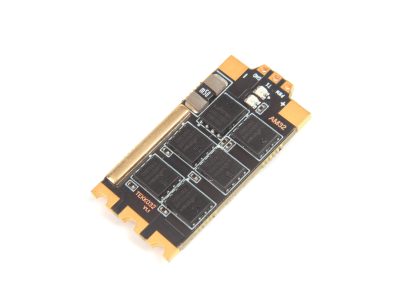
Tekko32 F4 45A ESC (AM32)
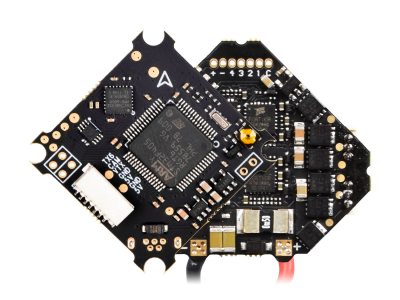
F4 Brushless Flight Controller and ESC V2.0 (BLHeli_32)
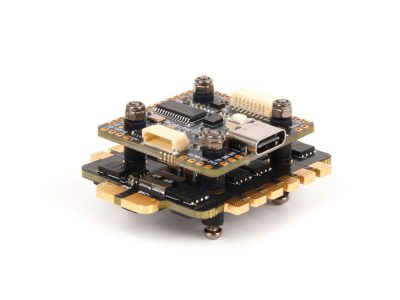
Kakute H7 Mini Stacks
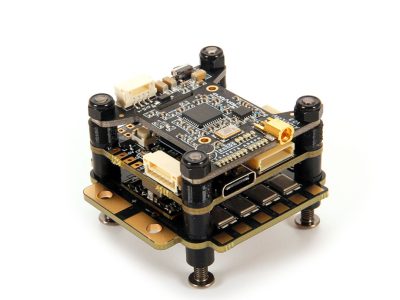
Kakute H7 v2 Stacks
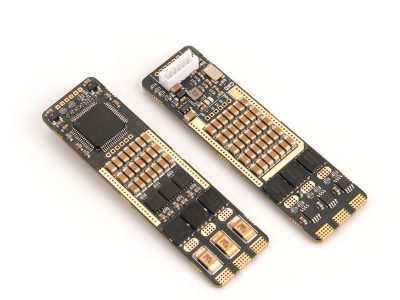
Holybro Mini FOC ESC Based on VESC®6
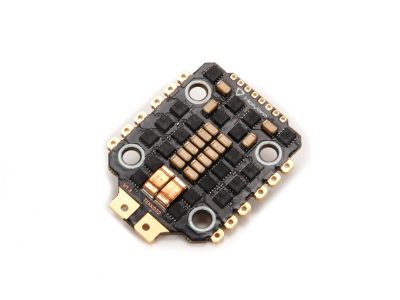
Tekko32 F4 4in1 Mini 45A ESC (AM32)
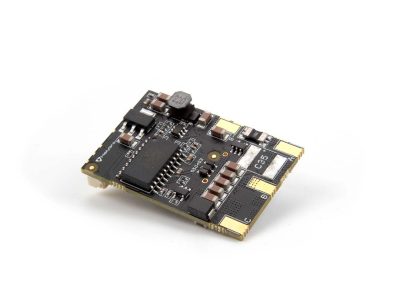
Kotleta20
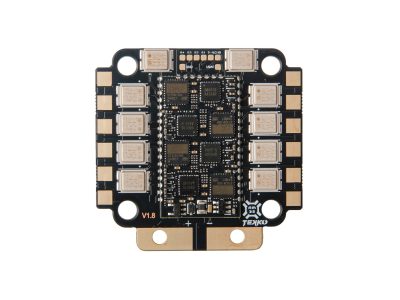
Tekko32 F4 Metal 4in1 65A ESC (AM32)
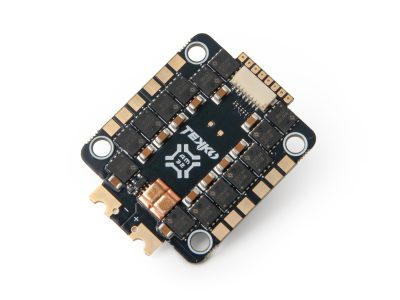
Tekko32 F4 4in1 50A ESC(AM32)
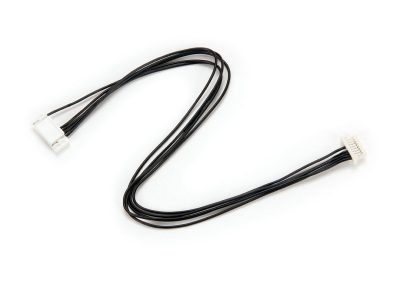
Pixhawk PWM Cable for Tekko32 4in1 ESC