IR Laser Illumination Series
Infrared laser illumination lets you see at night while staying unseen. It lights the scene in a band invisible to the human eye, and a camera sensitive to near-infrared turns that into a normal picture.
Two wavelengths
850 nm and 940 nm are common. 850 nm is more efficient in range: the camera sensor is more sensitive to it, but part of the emission shows as a faint red glow. 940 nm is almost invisible to the eye, which matters for covert work, but demands a more sensitive camera and gives up some range.
What to compare
- Wavelength: 850 nm for range, 940 nm for covertness.
- Beam angle: narrow for distance, wide for area coverage.
- Power: matched to the task and safety rules.
- Power and control: voltage and activation from the controller or gimbal.
- Compatibility: camera sensitivity in the infrared band.
CSKYUAV supplies infrared illuminators with OEM/ODM support. Night gimbals are in https://cskyuav.com/product-category/dual-sensor-tracking-series/ and https://cskyuav.com/product-category/1280-ir-thermal-series/.
Frequently asked questions
Is the illumination visible to the eye?
850 nm shows a faint red glow in darkness. 940 nm is practically invisible.
Do I need a special camera?
Yes, one sensitive to near-infrared. A normal camera with an IR-cut filter will not see the illumination.
Which to choose for covert work?
940 nm: it does not reveal the operator's position, though it needs a more sensitive sensor.
Is it safe?
Laser emission requires care: never point it at eyes or people, and respect the device class and local rules.
Can brightness be adjusted?
Many models allow power or beam-width adjustment. Confirm availability.
Does it help in daylight?
No; the point of illumination is night work. Daylight makes it unnecessary.
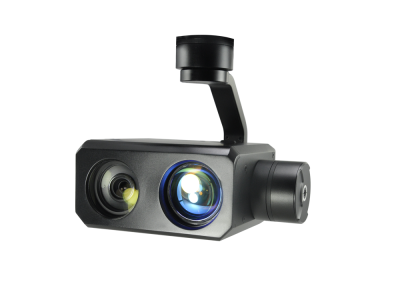
Z30TL
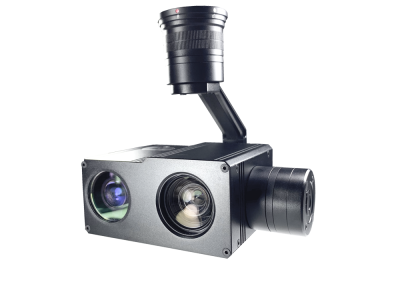
Z10TL