Flight Control
The flight controller (FC) is the aircraft's brain. It reads the gyroscope and accelerometer, estimates attitude, runs the PID loop and mixes your stick input into individual motor commands. Everything else in the build — ESC protocol, receiver wiring, GPS, OSD — hangs off the FC's UARTs and connectors.
MCU generations: F4, F7 and H7
The MCU determines how much processing headroom you have. F4 boards are budget-friendly and adequate for basic 4S builds. F7 boards add speed and more UARTs, which matters once you run GPS, telemetry and a digital VTX simultaneously. H7 is now standard on higher-end builds and those running complex firmware or high loop rates. Betaflight dropped support for some older F3-class hardware, so F4 or newer is the practical floor.
Firmware choice: Betaflight, INAV, ArduPilot
Betaflight is the default for acro and freestyle flying, with strong filtering and tuning tooling. INAV adds waypoint navigation and position hold for wings and GPS aircraft. ArduPilot is the usual choice for industrial, survey and autonomous platforms, running on Pixhawk-class hardware with redundant sensors and advanced mission planning.
Stacks, AIO boards and wiring
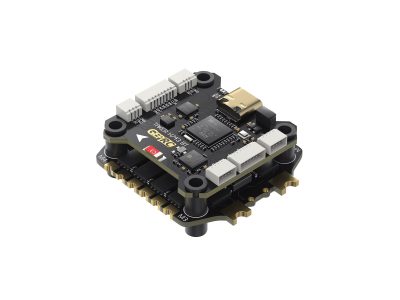
A conventional stack separates the FC from the ESC, usually 30.5×30.5 mm mounting and a plug-in harness. All-in-one (AIO) boards integrate the ESC underneath the FC to save weight and space, common on whoops and lightweight builds, with the trade-off that a single crash can take out both boards. Whichever you choose, plan UART allocation first: receiver, GPS, VTX control (SmartAudio/IRC Tramp) and telemetry each need a UART or a shared bus.
CSKYUAV supplies flight controllers from EMAX, GEPRC, HGLRC, Matek and Pixhawk-class boards, with OEM/ODM support for custom pinouts and pre-flashed firmware. Pair your FC with a compatible ESC, add a GPS module for position hold and return-to-home, and wire a receiver on the protocol your radio uses.
Frequently Asked Questions
What is the difference between F4, F7 and H7 flight controllers?
They are MCU families. F4 is entry level, F7 adds processing speed and more UARTs, and H7 offers the most headroom for high loop rates, complex filtering and multiple peripherals.
Which firmware should I use?
Betaflight for freestyle and racing, INAV for GPS navigation and fixed-wing, and ArduPilot for industrial, survey and autonomous applications. Choose the firmware first, then pick hardware it supports well.
What is an AIO flight controller?
An all-in-one board combines the flight controller and the ESC on a single PCB to save weight and volume. It is popular on tiny whoops and lightweight builds, but a hard crash can damage both functions at once.
How many UARTs do I need?
At least one for the receiver. Add one each for GPS, VTX control (SmartAudio or IRC Tramp) and telemetry if you use them. Count your peripherals before buying, because running out of UARTs is the most common wiring problem.
Do I need a barometer or compass on the FC?
A barometer helps altitude hold; a compass (magnetometer) is needed for reliable heading in GPS navigation modes. For pure acro flying neither is required.
Why does my FC show a gyro error?
Usually vibration reaching the gyro, an incorrect board orientation setting, or a damaged sensor after a crash. Soft-mount the stack, check the board orientation in the configurator, and inspect for physical damage.
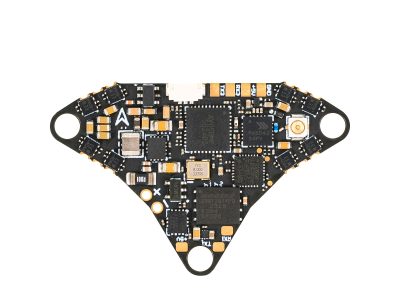
Air 1S Brushless Flight Controller
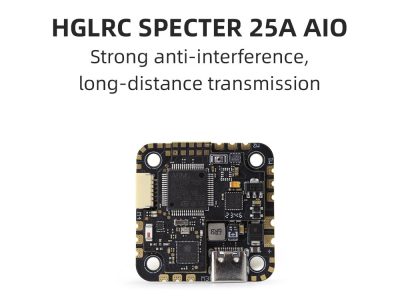
HGLRC SPECTER 25A AIO HD/Analog VTX Wireless Bluetooth tuning parameter adjustment integrated AIO
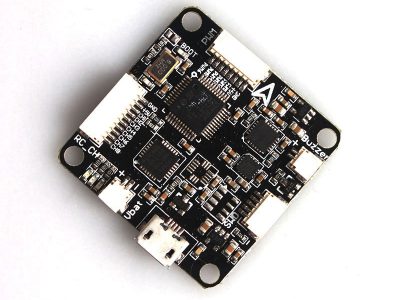
EMAX Skyline32 Flight Controller-Advanced
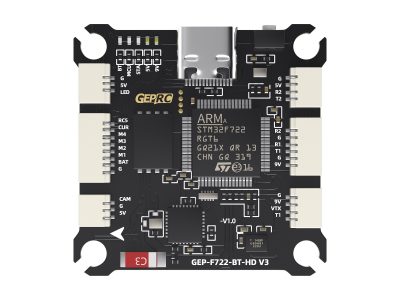
GEP-F722-BT-HD V3 Flight Controller
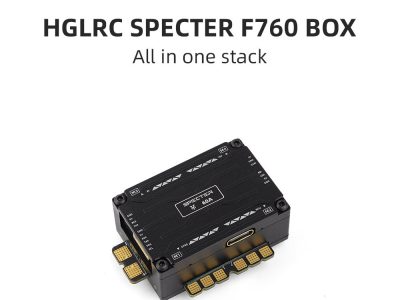
HGLRC SPECTER F760 BOX integrated stack
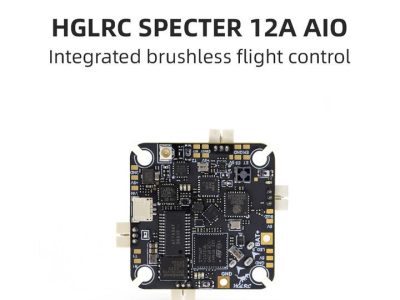
HGLRC SPECTER F411 12A AIO
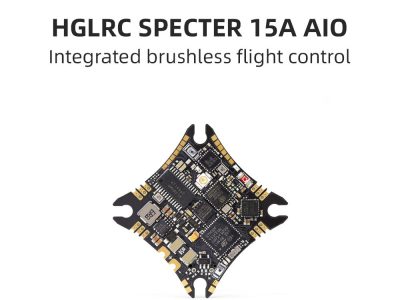
HGLRC SPECTER 15A ELRS AIO 2-4S 4-in-1 AIO FC for FPV drone
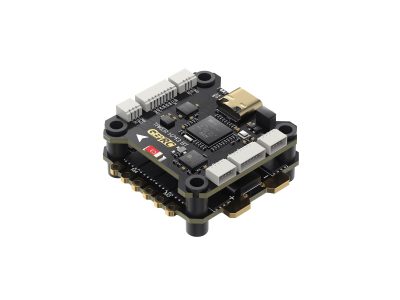
TAKER H743 BT 32Bit 50A Stack
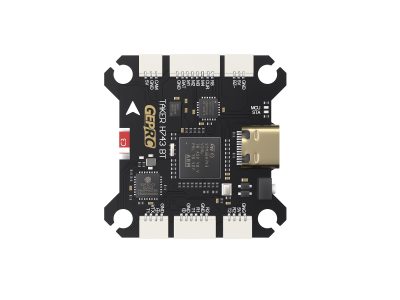
TAKER H743 BT Flight Controller
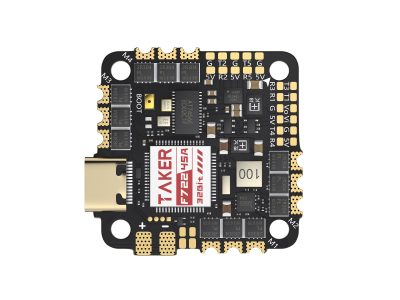
GEPRC TAKER F722 45A 32Bit AIO